If you are looking to rent a commercial property, one of the first figures you will see is the gross rental. It sounds straightforward, but it is also one of the most misunderstood terms in commercial property. Many tenants compare two premises simply by looking at the rental per square metre, only to discover later that one property costs significantly more to occupy than the other.
Understanding gross rental is not complicated. It simply means knowing exactly what is included in the rent, what you will pay separately and what your business will actually spend every month.
That is known as the total cost of occupancy, and it is the figure that really matters.
What is Gross Rental?
Gross rental is the monthly rental charged by a landlord for the use of a commercial property. It is usually quoted as an amount per square metre, per month, excluding VAT.
For example, if an office measures 200 m² and the gross rental is R180/m², the monthly rent is:
200 m² × R180 = R36,000 per month ex VAT
The important point is that gross rental is not always the final amount you will pay. It is simply the base rental, with certain operating costs included and others excluded.
Unfortunately, there is no single national standard. Different landlords include different items, so tenants should always ask for a detailed breakdown before signing a lease.
What is Usually Included?
In most commercial properties, gross rental includes the landlord's normal property operating expenses. These typically include:
- • Municipal rates and taxes
- • CID levies
- • Body corporate levies
- • Building insurance
- • Common area cleaning
- • Security of the building
- • Maintenance of shared areas such as foyers, passages and gardens
- • Management and administration of the property
These are costs the landlord incurs to own and operate the building and are generally recovered through the gross rental.
For example, if you rent an office in a multi-tenanted building, you benefit from cleaned reception areas, maintained lifts, security guards and landscaped gardens. Those costs are normally built into the gross rental rather than billed separately.
What is Usually Excluded?
This is where tenants often get caught out. Several expenses may be charged in addition to the gross rental. Common exclusions include:
- • VAT (where applicable)
- • Electricity
- • Water consumption
- • Sewerage charges
- • Refuse removal
- • Internet and telephone services
- • Parking bays (if charged separately)
- • Air-conditioning electricity after hours
- • Diesel charges for generator usage during load shedding
These items vary from building to building, but they can materially increase the monthly cost.
As an example, a tenant paying R36,000 gross rental may also receive monthly bills for electricity of R7,500, water of R1,200, parking of R2,000 and generator recovery of R800. The actual monthly occupancy cost becomes R47,500, before VAT.
That is why the advertised rental is only part of the picture.
Why Comparing Rentals Can Be Misleading
Imagine two similar 200 m² office buildings.
| Cost Item | Building A | Building B |
|---|---|---|
| Gross rental | R175/m² | R160/m² |
| Monthly base rental | R35,000 | R32,000 |
| Electricity | Included | R4,500 |
| Water | Included | R800 |
| Parking | Included | R1,500 |
| Generator levy | Included | R1,200 |
| Total monthly occupancy cost | R35,000 | R40,000 |
At first glance, Building B appears to be the bargain because its rental is R15/m² lower. However, once the additional monthly charges are included, it actually costs R5,000 more per month to occupy.
This is why experienced tenants compare the total cost of occupancy, not just the advertised rental. A lower rental does not necessarily mean a lower monthly cost, and understanding the full picture can save a business a substantial amount over the life of a lease.
Understanding the Total Cost of Occupancy
The total cost of occupancy is the complete monthly amount your business pays to occupy the premises. It includes every recurring property expense.
A simple calculation looks like this:
| Monthly Cost | Amount |
|---|---|
| Gross rental | R36,000 |
| Electricity | R7,500 |
| Water & sewerage | R1,200 |
| Parking | R2,000 |
| Generator recovery | R800 |
| Total | R47,500 |
This is the number that should be compared with other properties because it reflects the real cost of doing business from that location.
Ask the Right Questions
Before signing a lease, tenants should ask the landlord or broker a few simple questions.
- • Does the rental include municipal rates?
- • Are operating costs included?
- • How is electricity measured?
- • Is water separately metered?
- • Are parking bays included?
- • Is the rental inclusive or exclusive of VAT?
- • Are there generator or backup power charges?
- • What annual rental escalation applies?
These questions often reveal costs that are not obvious in the marketing brochure.
Gross Rental Versus Net Rental
You may also hear the term net rental.
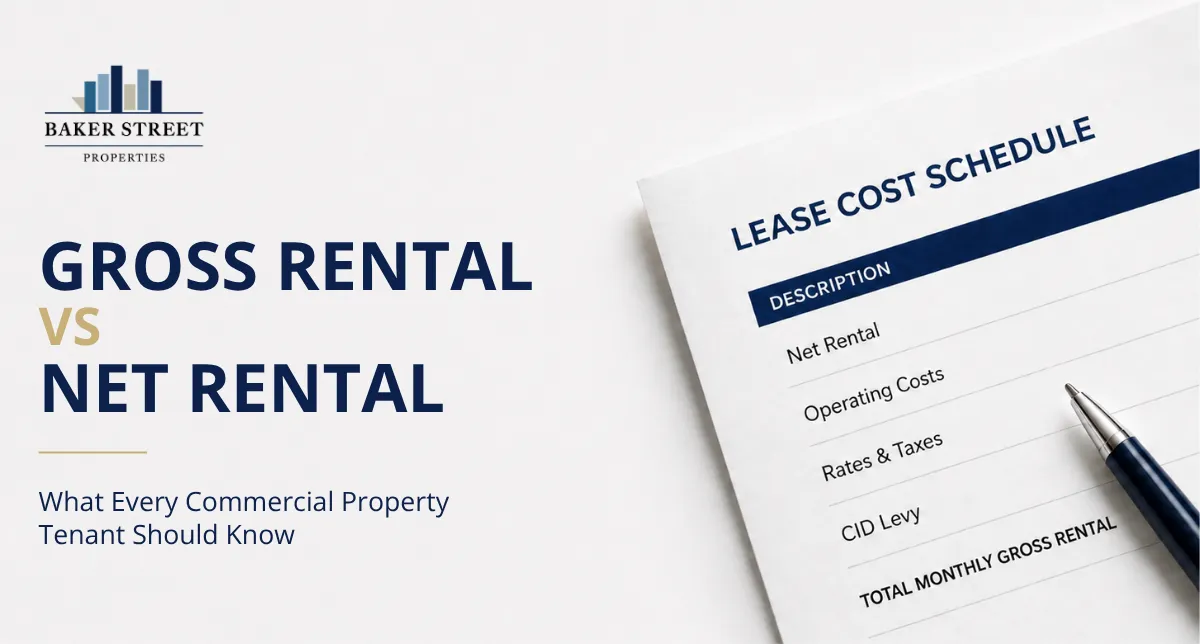
A net rental is lower because it excludes many of the landlord's operating costs. The tenant pays the base rental plus additional recoveries for rates, levies, insurance, security, maintenance, and so on. For example:
| Cost Item | Gross Lease | Net Lease |
|---|---|---|
| Base rental | R180/m² | R145/m² |
| Rates | Included | Extra |
| Insurance | Included | Extra |
| Security | Included | Extra |
| Cleaning | Included | Extra |
Neither structure is necessarily better. Gross leases are usually simpler because budgeting is easier, while net leases provide greater transparency by showing each expense separately.
The key is understanding which model is being offered.
Budget for Annual Increases
Commercial leases usually include an annual escalation. Utility costs may also rise independently as municipal tariffs increase.
For example, a tenant paying a gross rental of R47,500 per month today with an annual escalation of 8% would pay R51,300 after the first year's escalation, even before increases in electricity and water tariffs.
When preparing a business budget, it is sensible to allow for both rental escalation and rising utility costs rather than assuming expenses will remain constant.
Conclusion
Gross rental is an important starting point, but it should never be the only number considered. The real question is: what will this property cost my business every month?
By understanding what is included, identifying what is excluded, and calculating the total cost of occupancy, tenants can make informed decisions and avoid unexpected expenses. A property with a slightly higher gross rental may ultimately prove better value if it includes more services and results in a lower overall monthly cost.
Key Takeaways
- • Gross rental is the base rental per square metre, usually quoted excluding VAT — it is rarely the final amount you pay.
- • It typically includes rates and taxes, levies, building insurance, common area cleaning, security and shared-area maintenance.
- • VAT, electricity, water, refuse, parking and generator recoveries are usually charged on top, and can add thousands per month.
- • Compare properties on total cost of occupancy — a lower rental per square metre can end up costing more each month.
- • A net lease looks cheaper because operating costs are recovered separately; a gross lease is simpler to budget for.
- • Budget for the annual escalation and for rising municipal tariffs, not just today's monthly figure.
Know What a Property Will Really Cost
At Baker Street Properties, our brokers can help you understand the rental structure of a property and compare available options based on the costs that matter to your business.
If you are weighing up premises and want a clear breakdown of what is included, what is excluded, and what your total monthly occupancy cost will be, get in touch and we will walk you through it.
Get in Touch