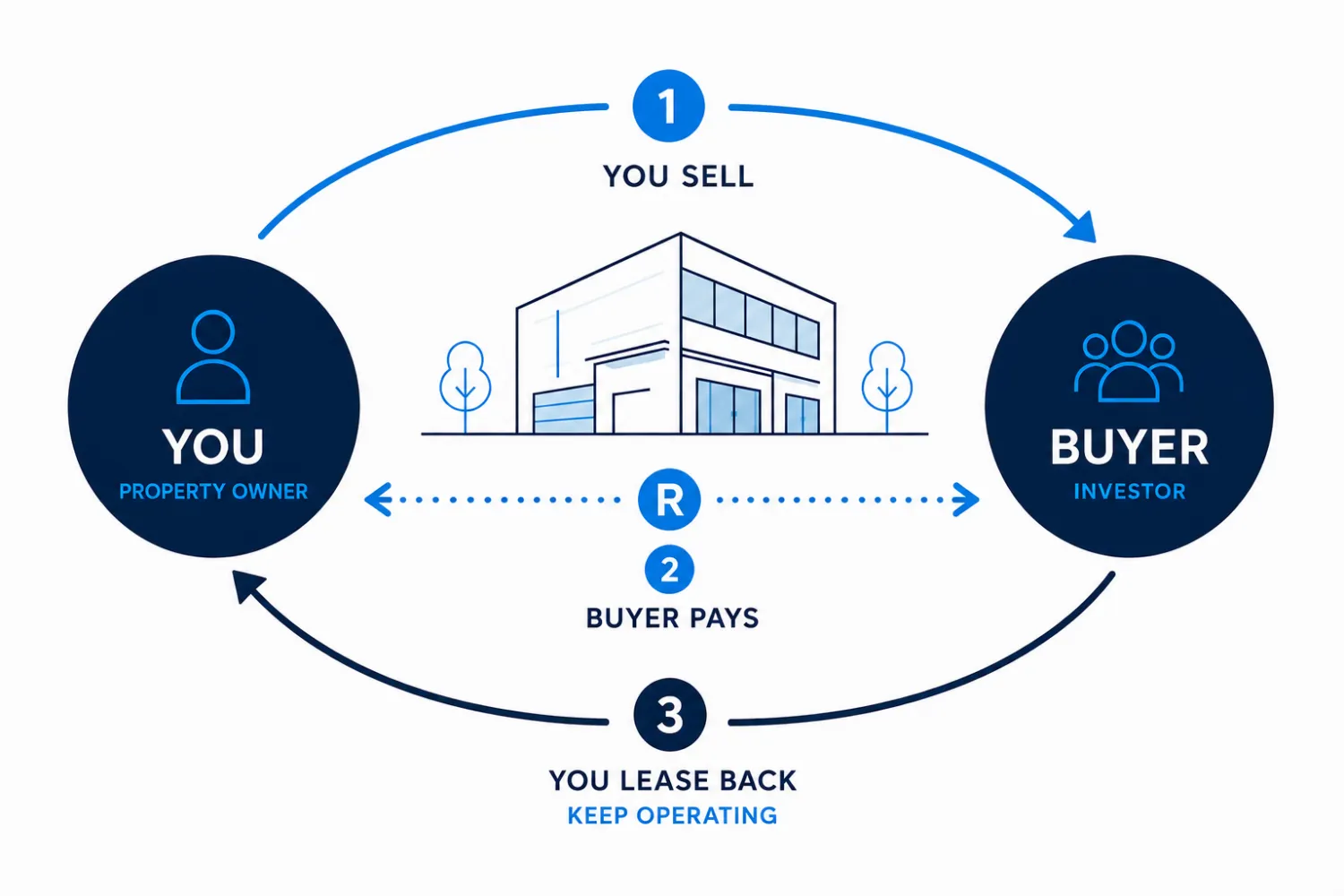
A sale and leaseback is a property transaction where a business owner sells a property it occupies to an investor and simultaneously enters into a lease agreement to remain in occupation of the premises.
In simple terms, the owner of a commercial property becomes the tenant, while the purchaser becomes the landlord. For many companies, commercial property represents a significant asset on the balance sheet, and a sale and leaseback can unlock the value of that asset without requiring the business to relocate.
It gives a business access to capital tied up in real estate while allowing operations to continue uninterrupted from the same location.
How Does a Sale and Leaseback Work?
In a typical sale and leaseback transaction:
- A business owns the property from which it operates.
- The property is sold to an investor.
- At the same time, the business signs a lease agreement to remain in occupation.
- The new owner receives rental income from the tenant.
- The business receives the proceeds from the sale while continuing to operate from the same premises.
The lease terms are negotiated prior to the sale and may include factors such as lease duration, escalation rates, renewal options, maintenance responsibilities and security provisions.
Because the lease is agreed upfront, the transition from owner to tenant is often seamless from an operational perspective.
Why Do Businesses Consider a Sale and Leaseback?
Every business has different objectives, but sale and leaseback transactions are often explored when companies wish to improve liquidity, strengthen their balance sheet or redeploy capital into their core operations.
Releasing Capital
Commercial property can tie up substantial amounts of capital. A sale and leaseback allows a business to convert a relatively illiquid asset into cash while continuing to occupy the property. The proceeds may be used for:
- •Business expansion
- •Acquisitions
- •New equipment or infrastructure
- •Debt reduction
- •Working capital requirements
- •Shareholder restructuring
Supporting Growth
Some businesses generate higher returns by investing capital into their operations rather than holding property assets. A sale and leaseback provides the opportunity for management to redirect funds toward growth opportunities while maintaining continuity at their existing premises.
Improving Balance Sheet Flexibility
For some organisations, reducing the amount of capital tied up in owner-occupied real estate can provide greater financial flexibility. The suitability of this approach depends on each company's financial position, long-term strategy and operational requirements.
Retaining Operational Stability
Unlike a traditional property disposal that may require relocation, a sale and leaseback allows the business to continue operating from the same premises under a lease agreement. This can minimise disruption to staff, customers, suppliers and daily operations.
What Are the Potential Benefits of a Sale and Leaseback?
While every transaction should be assessed individually, potential benefits may include:
Immediate Access to Capital
The most obvious advantage is the ability to unlock capital from a property asset without relocating.
Business Continuity
Operations can continue from the same location, reducing the disruption often associated with a property disposal.
Focus on Core Business Activities
Some organisations prefer to focus on operating their business rather than owning and managing real estate assets.
Long-Term Occupation Security
Lease agreements can often be structured with long lease periods and renewal options that provide certainty of occupation.
What Are the Key Considerations Before Entering a Sale and Leaseback?
A sale and leaseback can be a useful property strategy in certain circumstances, but it is important to understand the long-term implications.
Future Occupancy Requirements
One of the first questions a business should consider is whether the property will continue to meet its operational requirements over the duration of the proposed lease. Factors may include:
- •Growth projections
- •Staff requirements
- •Logistics considerations
- •Location requirements
- •Changes in operational needs
If a business anticipates significant changes in its space requirements, flexibility within the lease structure may become particularly important.
Rental Commitments
Following the sale, the business becomes a tenant and assumes ongoing rental obligations. It is important to understand:
- •Initial rental levels
- •Escalation provisions
- •Operating costs
- •Maintenance obligations
- •Lease duration
These costs should be assessed against the benefits generated from the capital released through the sale.
Property Market Conditions
The timing of a sale can influence the outcome of a transaction. Market conditions affecting value may include:
- •Investor demand
- •Interest rate environments
- •Property sector performance
- •Vacancy rates
- •Lease structures
A property's location, condition and income profile can also influence investor appetite.
Lease Structure
The lease is one of the most important components of a sale and leaseback transaction. Items commonly negotiated include:
- •Lease term
- •Renewal options
- •Escalations
- •Maintenance responsibilities
- •Exit provisions
The lease should support both the business's operational needs and the investor's requirements, as it will be a long-term relationship.
Long-Term Property Ownership Considerations
Businesses should also consider the implications of no longer owning the property. Potential considerations may include:
- •Future property appreciation
- •Control over the asset
- •Ability to modify or redevelop the property
- •Future occupancy flexibility
These factors should be weighed against the benefits of releasing capital.
Which Types of Properties Are Commonly Used?
Sale and leaseback transactions can occur across a variety of commercial property sectors. These may include:
Industrial Properties
Industrial owner-occupiers frequently utilise sale and leaseback structures, particularly where specialised facilities support manufacturing, logistics or distribution operations.
Office Buildings
Businesses occupying standalone office buildings may explore sale and leaseback transactions to unlock capital while maintaining their established location.
Retail Properties
Retail operators may consider sale and leaseback transactions where property ownership forms part of their balance sheet strategy.
Specialised Assets
Properties such as healthcare facilities, automotive dealerships, educational facilities and hospitality assets may also be suitable under certain circumstances.
Who Typically Purchases Sale and Leaseback Properties?
Sale and leaseback opportunities often appeal to investors seeking stable income streams. The attractiveness of a transaction may depend on factors such as:
- •Tenant covenant strength
- •Lease duration
- •Rental levels
- •Property location
- •Asset quality
- •Sector performance
Institutional investors, private investors and property funds may all participate in sale and leaseback transactions.
Why Do Investors Purchase Sale and Leaseback Properties?
Sale and leaseback transactions can benefit both the property owner and the investor. While the seller unlocks capital tied up in real estate, investors have the opportunity to acquire an income-producing asset with an established tenant already in place.
Well-structured sale and leaseback transactions are often attractive to investors because they may offer:
- •Predictable long-term rental income from an established occupier.
- •A strong tenant covenant, where the tenant has the financial strength to meet its lease obligations.
- •Long lease terms that provide greater income certainty and reduce vacancy risk.
- •Investment-grade commercial assets in established locations with long-term appeal and re-lettability if the tenant does move out after their initial lease term.
The attractiveness of any sale and leaseback opportunity will ultimately depend on factors such as the quality of the property, the lease structure, prevailing market conditions and the financial strength of the tenant.
Frequently Asked Questions
What is the main purpose of a sale and leaseback?
A sale and leaseback allows a property owner to sell a property while remaining in occupation as a tenant, thereby releasing capital tied up in the asset.
Can a business continue operating from the property after the sale?
Yes. The business typically remains in occupation under a lease agreement negotiated as part of the transaction.
Is a sale and leaseback only used for large companies?
No. While commonly associated with larger corporates, sale and leaseback transactions can be utilised by businesses of various sizes depending on their circumstances and property ownership structure.
What types of commercial properties can be used?
Office, industrial, retail and specialised commercial properties may all be suitable depending on the specific asset and business requirements.
Does a sale and leaseback guarantee financial benefits?
No. The outcome of any transaction depends on multiple factors including market conditions, lease terms, valuation, financing considerations, the financial position of the tenant and the specific objectives of the parties involved.
Conclusion
A sale and leaseback is a well-established commercial property strategy that enables businesses to unlock capital from owner-occupied real estate while maintaining operational continuity through a lease agreement.
Like any property transaction, it involves both opportunities and considerations. Factors such as lease structure, long-term occupancy requirements, rental commitments and market conditions can all influence whether a sale and leaseback aligns with a business's objectives.
For property owners exploring their options, understanding how a sale and leaseback works is an important first step in evaluating whether the structure may be appropriate for their particular circumstances.
Key Takeaways
- • In a sale and leaseback the owner-occupier sells the property and leases it straight back — becoming the tenant while the investor becomes the landlord.
- • It releases capital tied up in real estate without requiring the business to relocate, keeping operations running from the same premises.
- • The lease is negotiated upfront — term, escalations, renewals, maintenance and exit provisions all matter for both parties.
- • Office, industrial, retail and specialised assets can all be suitable, and businesses of many sizes use the structure.
- • Investors are drawn to predictable income, a strong tenant covenant and long lease terms on investment-grade assets.
- • Rental commitments, future occupancy needs and the loss of ownership should be weighed against the capital released.
Considering a Sale and Leaseback?
Understanding the potential advantages, risks and long-term implications of a sale and leaseback requires careful consideration of both the property and the business occupying it.
The team at Baker Street Properties works with owner-occupiers, investors and businesses across the Western Cape and can provide insight into current market conditions, investor demand and commercial property trends. Get in touch to discuss your commercial property requirements or to learn more about sale and leaseback opportunities in today's market.
Get in Touch